
.png)
Wine in Mallorca: A Local Guide to the Island’s Best Wineries and Vineyards


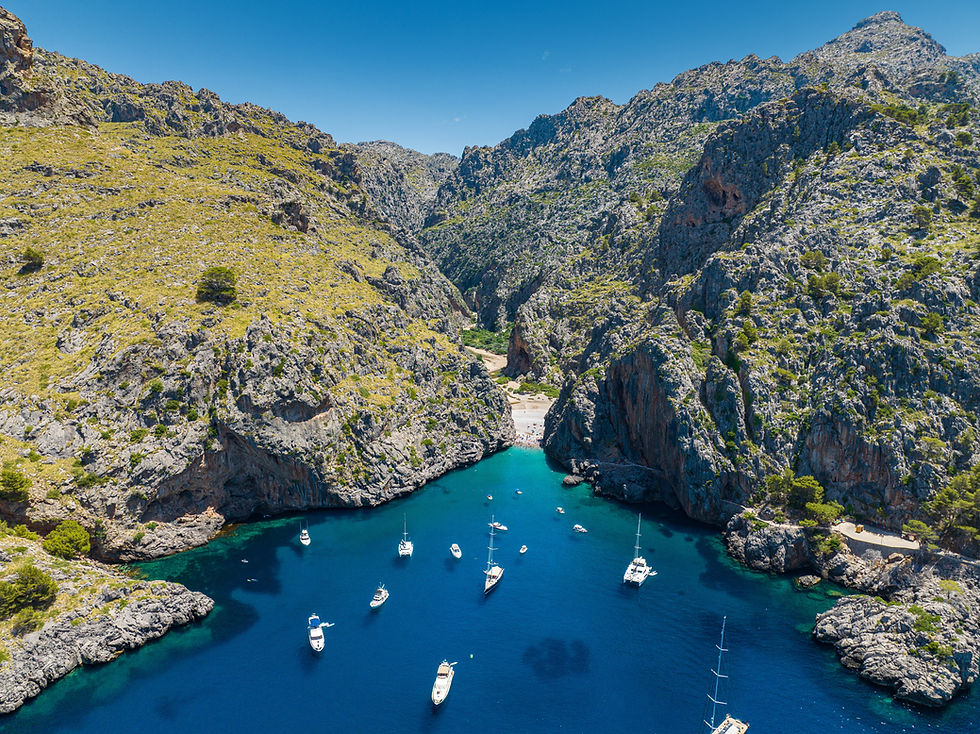
For many visitors, Mallorca begins with the Mediterranean. For Mallorcans, however, the island has always extended much further inland.
Drive away from the coast and another landscape appears: dry-stone walls, almond and carob trees, ochre soil, small villages and vineyards that have been cultivated for generations. Wine is not a recent addition to Mallorca's gastronomic scene. It is part of the agricultural landscape and, increasingly, one of the best ways to understand the island itself.
Today, Mallorca has two protected wine denominations — DO Binissalem and DO Pla i Llevant — as well as wines produced under geographical indications such as Vi de la Terra Mallorca. More importantly for the curious traveller, it has something that cannot simply be replicated elsewhere: a collection of indigenous grape varieties such as Manto Negro, Callet, Prensal Blanc or Moll, Giró Ros, Fogoneu and Gorgollassa.
And if there is one particularly fascinating time to discover them, it is during the grape harvest.
When is the grape harvest in Mallorca?
September is traditionally associated with the verema — the grape harvest — in Mallorca, but the reality is slightly more complicated.
There is no single harvest date. Picking depends on the vineyard, altitude, grape variety, weather and the style of wine a producer wants to make. In warm recent vintages, some grapes have been harvested as early as late July or August, while later-ripening varieties continue well into September.
Recent harvest data from DO Pla i Llevant, for example, show white varieties entering wineries throughout August, with harvesting increasingly shifting towards later red varieties during September. In DO Binissalem, the 2024 harvest ran from 9 August until 24 September.
So why visit in September?
Because this is when wine country feels particularly alive. Tractors move between vineyards and cellars, freshly picked grapes arrive at the wineries, fermentation begins and the year's new wines start their journey.
It is also worth understanding that harvest time is work, not theatre. A serious winery may be busier than usual, visits can occasionally need to adapt around production, and winemakers may have considerably less time than they do in winter. That is precisely what makes the period interesting.
Festa des Vermar in Binissalem
The cultural side of the harvest is most visible in Binissalem's Festa des Vermar, one of Mallorca's great traditional celebrations of wine and the grape harvest.
In 2026, the 60th edition takes place from 4 to 27 September, with a programme involving wine, gastronomy, music and traditions including grape-treading events and the local fideus de vermar.
It is worth visiting not simply for the wine, but to understand how deeply viticulture is woven into the social identity of this part of Mallorca.
Understanding Mallorca's wine regions
You do not need to memorise appellation regulations to enjoy Mallorcan wine, but understanding the geography makes a tasting considerably more interesting.

DO Binissalem: Mallorca's historic wine heartland
At the foot of the Serra de Tramuntana, DO Binissalem covers the municipalities of Binissalem, Santa Maria del Camí, Consell, Sencelles and Santa Eugènia.
Here vineyards share the landscape with almond, fig, olive and carob trees. The Serra de Tramuntana provides a dramatic backdrop and influences the area's growing conditions.
The grape to remember is Manto Negro.
It is one of Mallorca's emblematic red varieties and fundamental to DO Binissalem: red wines under the denomination must contain at least 30% Manto Negro. For whites, Moll — also known as Prensal Blanc — plays the equivalent role.
Do not expect every Mallorcan red to taste like a powerful mainland Spanish wine. One of the pleasures of Manto Negro is precisely its more Mediterranean, often less extracted personality.
DO Pla i Llevant: the centre and east of Mallorca
The second major denomination, DO Pla i Llevant, spreads across much of central and eastern Mallorca, including traditional wine towns such as Felanitx, Manacor, Porreres, Petra and Artà.
Its vineyards grow in a landscape increasingly influenced by the proximity of the sea and its breezes. Local varieties include Callet, Manto Negro, Fogoneu and Gorgollassa, alongside whites such as Prensal Blanc and Giró Ros.
For anyone genuinely interested in wine, this part of Mallorca is important. Some of the island's most distinctive modern producers have demonstrated that native grapes — once considered humble or purely local — can make wines of considerable personality.
And what about wines without a DO?
This is an important point.
Do not assume that a wine carrying Vi de la Terra Mallorca rather than one of the two DO labels is somehow inferior.
Mallorca's contemporary wine scene includes ambitious producers working outside the two denominations or choosing a different classification for stylistic or technical reasons. When reading a wine list on the island, producer and grape variety can tell you considerably more than the simple presence or absence of a DO.
That is one reason a good wine tasting in Mallorca should never be reduced to simply comparing appellations.

The Mallorcan grapes worth looking for
If you can drink Cabernet Sauvignon, Chardonnay or Syrah almost anywhere in the world, there is little point travelling to Mallorca and tasting only international varieties.
Ask for the grapes that speak specifically of the island.
Manto Negro
The signature red grape of Binissalem. It can produce wines with ripe red-fruit character, Mediterranean herbal notes and a generally supple profile. The official DO also identifies aromas ranging from ripe fruit and pomegranate to carob and vegetal nuances.
Callet
Particularly associated with eastern Mallorca and one of the grapes responsible for the renaissance of modern Mallorcan wine. It is capable of producing elegant, characterful wines without relying on sheer extraction or oak.
Prensal Blanc / Moll
Two names for the same important white variety. In Binissalem it is known traditionally as Moll. Expect subtle rather than aggressively aromatic wines: white fruit, apple and freshness are typical markers cited by the denomination.
Giró Ros
One of the most interesting local white varieties for curious wine drinkers. It can show more weight and aromatic intensity than Prensal Blanc, with stone-fruit and floral or honeyed notes depending on the wine.
Gorgollassa, Fogoneu and Escursac
These are names worth remembering if you want to go deeper. They are less common and sometimes appear in small-production wines, blends or experimental projects.
A useful rule when tasting in Mallorca is simple: if you see a grape on the list that you have never heard of before, order it.
That is usually where the journey becomes interesting.
Wineries in Mallorca worth knowing

There is no meaningful single list of the “best wineries in Mallorca”. A historic estate, a small biodynamic producer and a technologically ambitious contemporary winery offer completely different experiences.
These are some of the names we would consider depending on what kind of wine day you want.
Bodega Ribas — Consell
For history, indigenous varieties and a sense of place, Bodega Ribas is one of the essential addresses on the island.
Founded in 1711, Ribas describes itself as Mallorca's oldest winery. Its historic estate in Consell combines the original eighteenth-century house with contemporary winemaking facilities. Guided visits explore the winery before tastings that can be accompanied by Mallorcan bread, olive oil and local food.
This is a particularly good choice for someone who wants more than a tasting counter: architecture, history and wine all make sense together here.
Best for: heritage, serious wine lovers and a first introduction to traditional Mallorcan wine culture.
Bodegas José L. Ferrer — Binissalem
If Ribas takes you back into the island's wine history, José L. Ferrer helps explain how Mallorca's modern wine industry developed.
Established in Binissalem in 1931, it remains one of the area's landmark producers and works extensively with native varieties including Manto Negro and Moll.
It is a useful visit for travellers who want to understand both historic winemaking and the evolution towards a larger, modern Mallorcan winery.
Best for: first-time visitors to Binissalem and anyone wanting a broad introduction to DO Binissalem.
Finca Biniagual — Biniagual
Biniagual is one of those places where the setting is almost inseparable from the wine.
The winery sits within a preserved historic Mallorcan hamlet surrounded by vineyards and agricultural land. The estate resumed its viticultural activity in the late 1990s and today places particular emphasis on local grapes including Manto Negro and Prensal Blanc.
Its current wine experiences range from tastings with Mallorcan products to more complete winery tours and premium formats.
This is one of the better choices when the people in your group care as much about landscape, atmosphere and gastronomy as they do about technical wine details.
Best for: couples, private experiences and travellers looking for an elegant wine-country setting.
Macià Batle — Santa Maria del Camí
Macià Batle has been making wine since 1856 and today offers one of the more accessible introductions to wine tourism near Palma.
Visits cover the journey from grape reception and fermentation to barrel and bottle ageing, followed by a tasting of five wines accompanied by Mallorcan products.
Its location in Santa Maria del Camí also makes it very easy to incorporate into a broader exploration of the Raiguer and central Mallorca.
Best for: visitors staying in Palma, newcomers to wine and travellers wanting a structured winery experience.
Mesquida Mora — Porreres
For something more intimate and agricultural, head towards Porreres.
Mesquida Mora approaches wine through a biodynamic estate project, and its wine tourism programme includes everything from informal tastings to more technical visits through the vineyards and winery.
This is where the conversation moves naturally away from tasting notes and towards soils, farming, biodiversity and how wine begins long before grapes reach a fermentation tank.
Best for: organic and biodynamic wine enthusiasts and visitors who want to understand viticulture rather than simply taste finished wines.
Can Axartell — northern Mallorca
Can Axartell offers a very different perspective.
Its vineyards have been cultivated according to certified organic principles from the outset, while the modern winery was designed around what it calls Mètode Gravetat: grapes and wine move through the winemaking process using gravity rather than pumps.
The combination of modern architecture, engineering, organic viticulture and Mallorcan grape varieties makes it particularly interesting for people who have already visited more traditional wineries.
Best for: architecture, contemporary winemaking and travellers staying around Pollença or northern Mallorca.
Two more names serious wine drinkers should know
Not every important producer needs to be approached primarily as a tourist attraction.
If you are exploring restaurant wine lists or specialist wine shops, remember Ànima Negra and 4Kilos Vinícola, both based around Felanitx.
Ànima Negra was founded in 1994, while 4Kilos was created in 2006 by winemaker Francesc Grimalt and Sergio Caballero. Grimalt's work has been particularly associated with renewed interest in Mallorca's Callet grape.
If you want to understand why contemporary Mallorcan wine gained an audience far beyond the island, these are names worth recognising.
How to plan a wine tour in Mallorca properly
This is where many visitors get it wrong.
Do not try to visit four wineries in a day
You can. You probably should not.
Two well-chosen wineries, a good lunch and some time in the countryside will almost always make a better day than racing between tasting rooms.
Wine tourism works best when you leave room for conversation.

Choose wineries for contrast
Rather than visiting two almost identical experiences, combine different philosophies.
For example:
Ribas + Biniagual gives you heritage, native grapes and two very different historic settings.
José L. Ferrer + a smaller producer creates a useful contrast between scale and intimacy.
Mesquida Mora + a visit around Porreres or Felanitx makes sense if your interest is agriculture, native varieties and the eastern wine country.
Ask to taste local varieties
If the standard tasting includes Cabernet Sauvignon, Merlot or Chardonnay, enjoy them — but also ask whether there is a Manto Negro, Callet, Prensal Blanc, Giró Ros or another indigenous grape available.
Those are the bottles you are much less likely to discover at home.
Book in advance during harvest
September is fascinating, but wineries are working.
A tasting room may look peaceful while a few metres away the year's entire crop is arriving at the cellar. Booking in advance is particularly important during the harvest period.
Do not drive if the point of the day is wine
This sounds obvious, yet it changes the experience completely.
If one person is calculating what they can or cannot taste before driving back across Mallorca, you have not really organised a wine tour.
A private driver or guide allows everyone to participate and also solves another problem: many of the island's most interesting wineries sit among small inland roads where public transport is not practical.
A perfect wine day in Mallorca
There is no need to turn wine tourism into an endurance test.
A good day might begin in Santa Maria del Camí, Consell or Binissalem, continue through the vineyards for a private winery visit, move on to a second producer with a completely different philosophy and finish over a long Mallorcan lunch.
Another might head east towards Porreres and Felanitx, where the wine story becomes more closely connected to Callet, small producers and the agricultural landscape of Pla i Llevant.
In northern Mallorca, a winery such as Can Axartell can be combined with Pollença and the foothills of the Serra de Tramuntana.
The important thing is that the itinerary follows the landscape rather than simply a list of wineries.
That is also the difference between visiting a winery and understanding Mallorca through wine.
Is September the best month for wine tasting in Mallorca?
It depends what you want.
September offers the energy of the grape harvest and one of the most interesting moments in the annual cycle of the vineyard.
Autumn and winter can be quieter and more contemplative, often giving wineries more time for detailed tastings.
Spring is beautiful in the vineyards and ideal for combining wine with walking, villages and countryside.
There is no bad season to discover Mallorca's wine country. There are simply different versions of it.

Frequently asked questions about wine in Mallorca
Does Mallorca produce good wine?
Yes. Mallorca has two Denominations of Origin, numerous wines under other geographical indications and a growing number of producers working seriously with indigenous grape varieties. The most interesting wines are often those that express varieties rarely found outside the Balearic Islands.
What are the main wine regions in Mallorca?
The two official DOs are Binissalem, in the centre of the island near the Serra de Tramuntana, and Pla i Llevant, covering a large area of central and eastern Mallorca.
What wine is Mallorca famous for?
Rather than one particular wine, Mallorca is increasingly known for its native grapes. Look especially for Manto Negro, Callet, Prensal Blanc/Moll and Giró Ros, as well as smaller plantings of grapes such as Gorgollassa and Fogoneu.
When is grape harvest season in Mallorca?
Harvest generally takes place from August into September, although timing varies significantly according to grape variety, vineyard and weather conditions. September remains one of the most interesting months to experience the culture surrounding the harvest.
Do you need to book winery visits in Mallorca?
For a proper guided visit, yes. Many wineries work with limited group sizes or scheduled tastings, and advance reservations are particularly advisable during summer and harvest season.
Discover Mallorca through its wine
Mallorca's beaches are obvious. Its wine country requires a little more curiosity.
That is precisely the attraction.
Behind every bottle is another version of the island: inland villages, farming families, old estates, recovering grape varieties and landscapes that most visitors drive past without really seeing.
At Mallorca Private Tour Guide, we can create private wine itineraries around the island according to your interests — from historic wineries in Binissalem to smaller producers, local gastronomy and villages away from the usual routes.
Because the best wine tour in Mallorca should not simply be about how many wines you taste.
It should leave you understanding the island a little better than before.

Book Your Private Wine Tour in Mallorca
Discovering Mallorca through its wine is about far more than visiting a winery and tasting a few bottles. It is about understanding the landscapes, native grape varieties, agricultural traditions and people that have shaped the island’s wine culture for generations.
With a private wine tour in Mallorca, the experience can be designed entirely around your interests, combining carefully selected wineries, vineyard visits, indigenous varieties such as Manto Negro, Callet, Prensal Blanc or Giró Ros, traditional villages and Mallorcan gastronomy.
From the historic wine country of Binissalem to the vineyards of Pla i Llevant, every area offers a different perspective on Mallorca. Depending on the season, the experience may also provide an insight into the grape harvest, winemaking process and the work taking place behind the scenes in the cellar.
This is not simply about wine tasting. It is about discovering Mallorca through its land, its producers and its flavours, at your own pace and with the insight of a native Mallorcan guide.
For those willing to leave the coast behind, Mallorca’s wine country reveals one of the island’s most authentic and rewarding sides.
🌐 Website: www.mallorcaprivatetourguide.com
📧 Email: info@mallorcaprivatetourguide.com
📞 Phone / WhatsApp: +34 699 074 028
✉️ Contact us to create your personalized private wine tour in Mallorca, combining wineries, vineyards, local gastronomy and some of the island’s most beautiful inland landscapes.
⚠️ Winery visits are subject to availability, particularly during the harvest season and peak travel periods. Advance booking is highly recommended.


Comentarios